


News iconNews

announcement icon We released CoAx — welcome to reach out and discuss!

news icon Two papers accepted by ICML 2026: SubspacePath Pruner and XDomainBench.

news icon SubspacePath Pruner and Rule-Guided Active Inference accepted by ICML AdaptFM Workshop and ICML FoGen Workshop.

news icon One paper accepted by ICLR 2026: Rule-Guided Active Inference.

news iconJoined NTU as a PhD candidate and received the NTU Research Scholarship (RSS).

news iconJoined CUHKSZ as a research intern.

Publications iconSelected Publications

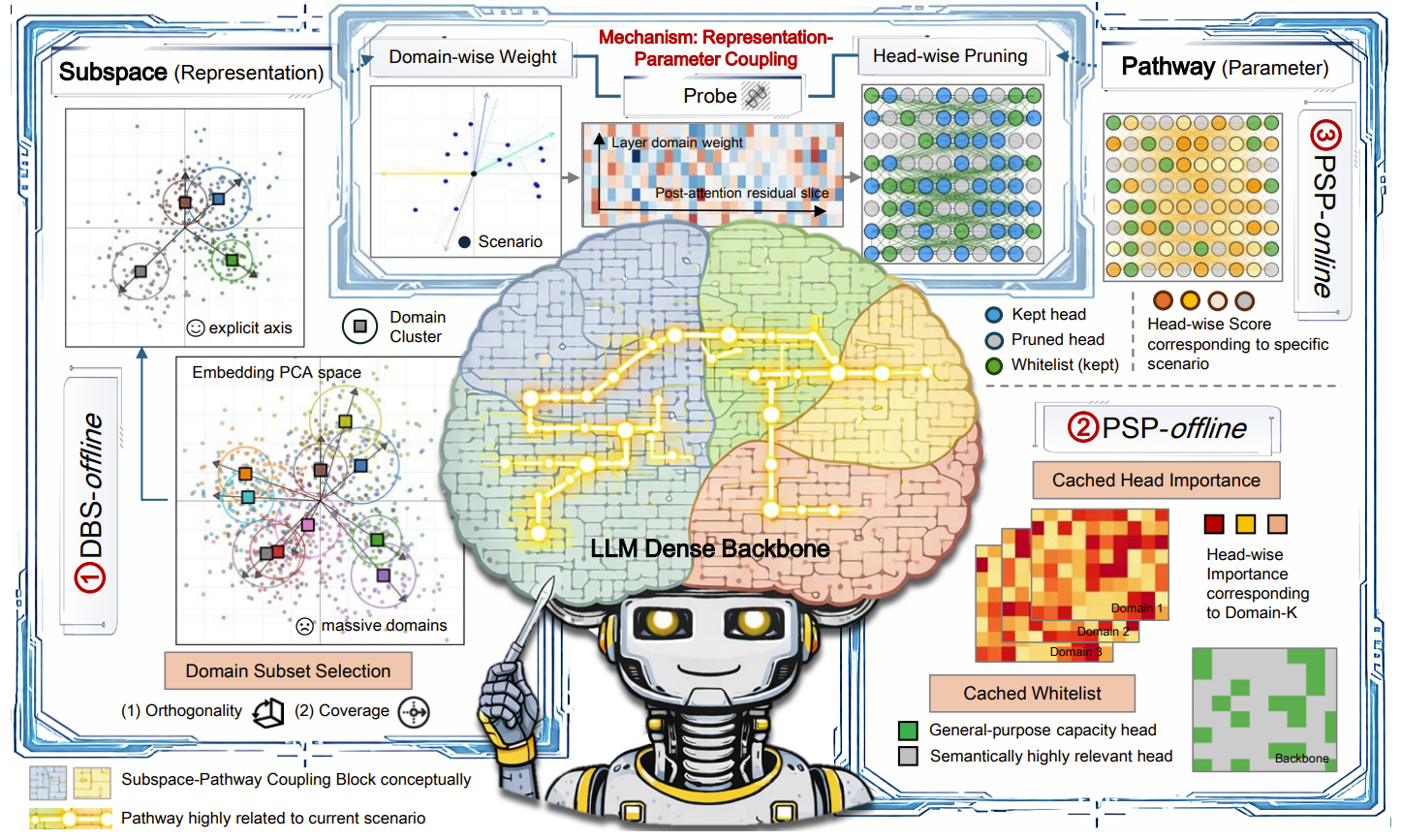
SubspacePath Pruner project figure

SubspacePath Pruner: Inference-time Pruning via Probe-based Representation-Parameter Coupling

Zhiren Gong, Yikun Hou, Fan Wu, Che Wang, Fuyao Zhang, Tiantong Wu, Yurong Hao, Jiaming Zhang, Yiyang Duan, Tiantong Wang, Fei Huang, Chau Yuen, Wei Yang Bryan Lim

ICML 2026
SubspacePath Pruner introduces an inference-time pruning mechanism that couples representation probes with parameter pathways, enabling scenario-adaptive routing that retains robustness while reducing unnecessary computation.
# Model Efficiency # Inference-Time Pruning # Routing
Rule-Guided Active Inference figure

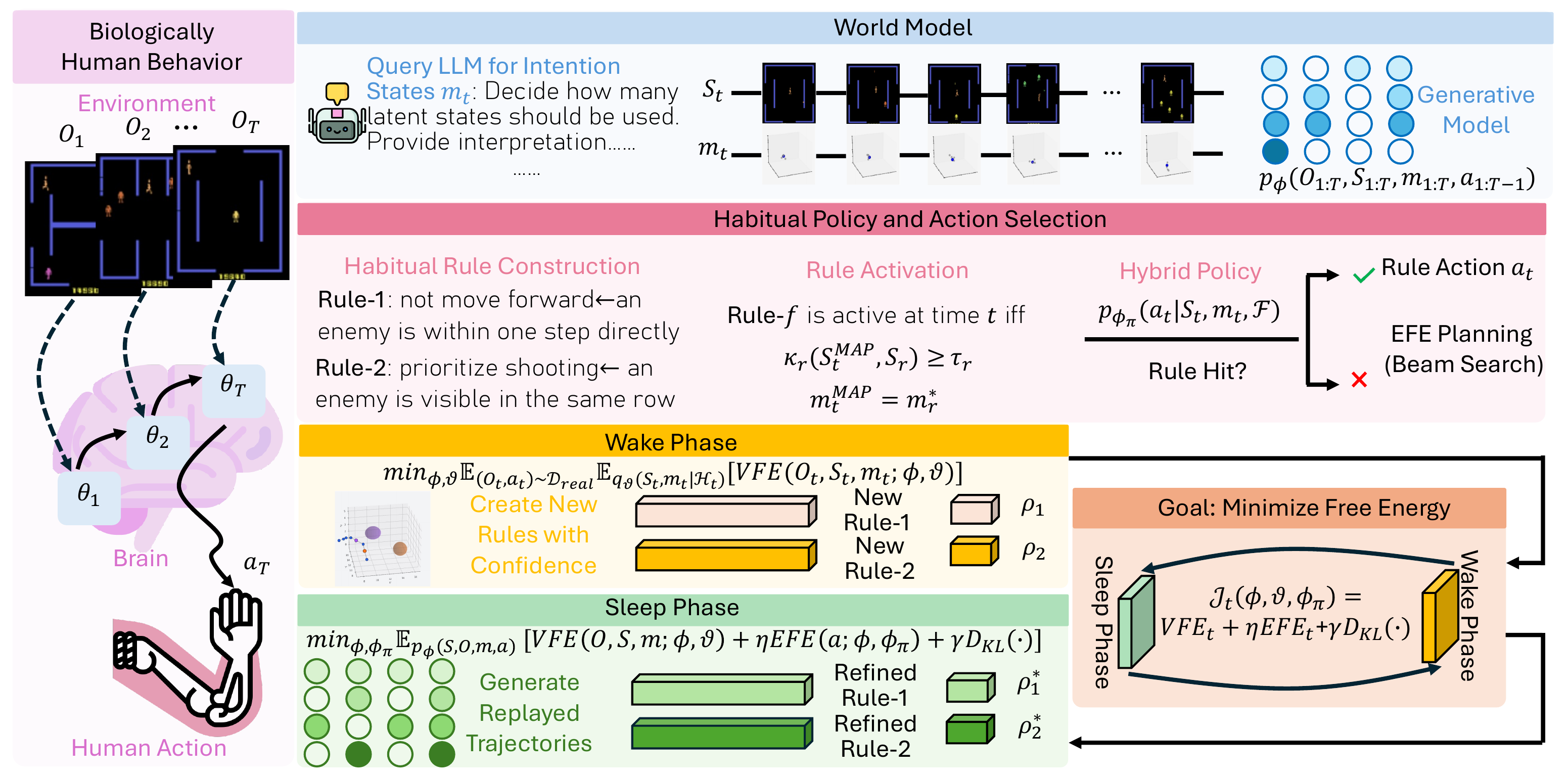
Learning Human Habits with Rule-Guided Active Inference

Zhiren Gong, Chao Yang, Wendi Ren, Shuang Li

ICLR 2026
This work combines active inference with explicit rule constraints to model habit dynamics in sequential decision settings, improving action quality and latency in realistic environments.
# Active Inference # Decision Intelligence # Interpretable Planning
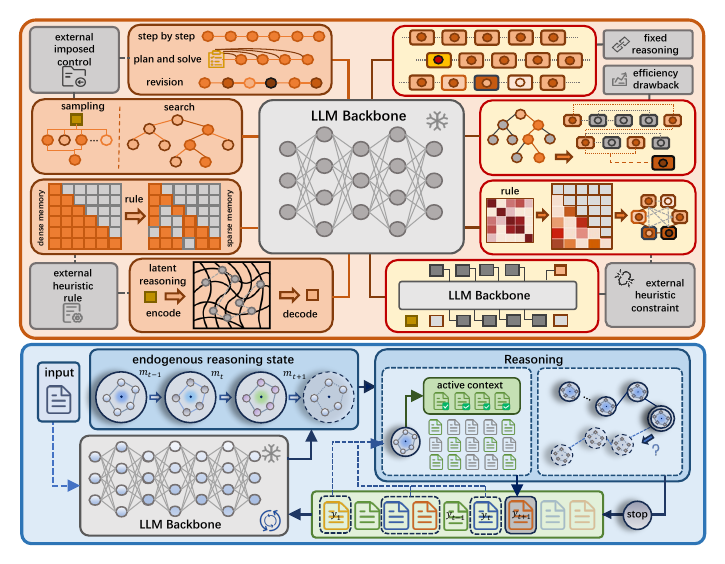
SoT project figure

State of Thought Enables Endogenous Reasoning

Zhiren Gong, Yikun Hou, Zeng Zihao, Ming Xiao, Chau Yuen, Wei Yang Bryan Lim

Coming soon
SoT studies endogenous state-conditioned reasoning to improve quality-efficiency trade-offs across backbones and benchmark families.
# Reasoning # Efficiency # State Modeling
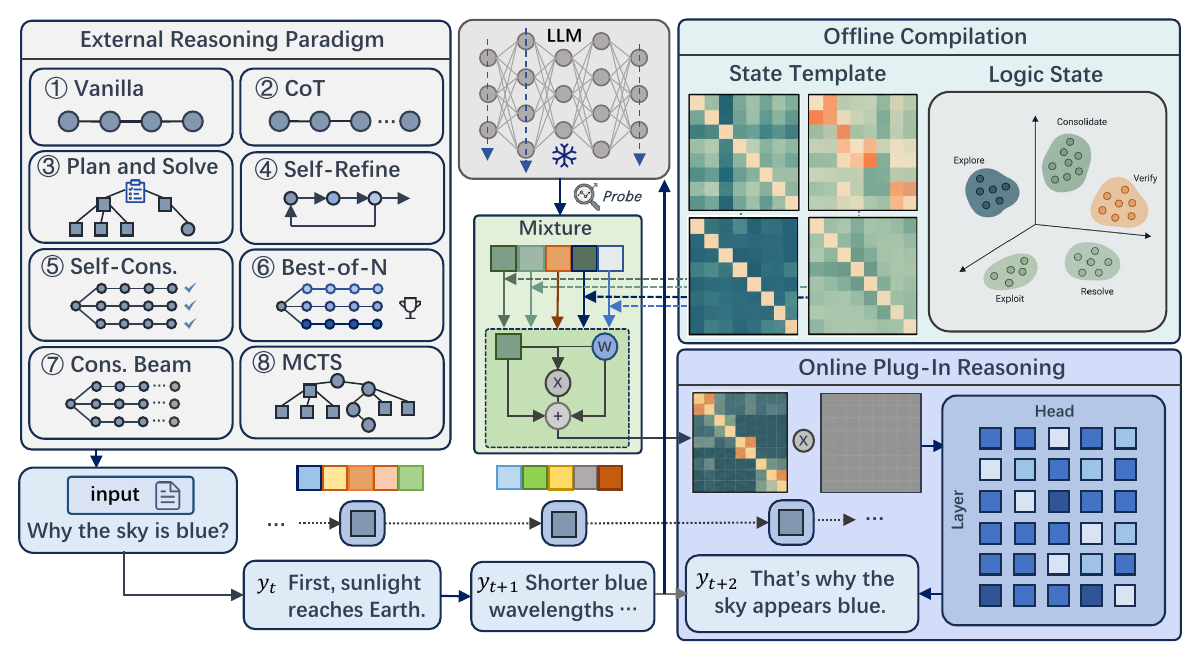
LoTR project figure

LoTR: Logic-of-Thought Routing for Plug-and-Play Reasoning of LLMs

Zhiren Gong, Ming Xiao, Chau Yuen, Wei Yang Bryan Lim

Coming soon
LoTR enhances existing external reasoning paradigms by routing internal computation pathways according to evolving logic states at each reasoning step.
# Plug-and-Play # Logic Routing # LLM Reasoning
Conditional Co-Ablation project figure

Conditional Co-Ablation: Recovering Self-Repair Backups in Transformer Circuits

Zhiren Gong, Zihao Zeng, Chau Yuen, Wei Yang Bryan Lim

Preprint
CoAx (conditional co-ablation) recovers dormant self-repair backup components that first-order ablation scores miss, improving backup-head discovery, repair-aware attribution, capability knockout, and structured pruning across transformer circuits.
# Mechanistic Interpretability # Self-Repair # Circuit Discovery
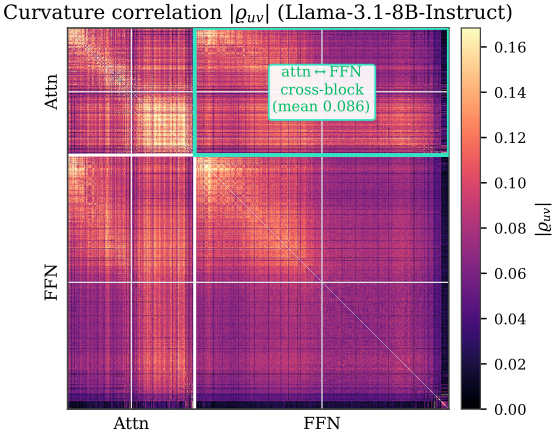
CoCurve cross-module curvature correlation matrix

CoCurve: Cross-Module Co-Pruning Curvature for Training-Free Structured LLM Pruning

Zhiren Gong, Zihao Zeng, Zijie Wang, Chau Yuen, Wei Yang Bryan Lim

Preprint
Almost every structured-pruning method scores each unit in isolation, assuming set damage is additive — the wrong granularity for a Transformer's shared residual stream. CoCurve prunes attention and FFN units jointly: a single Fisher matrix whose diagonal is node saliency and whose off-diagonal entries are cross-module co-pruning curvature edges, provably a Gram product recoverable from just M single-unit ablations. It leads every capability class on Llama-3.1-8B at 20% and best preserves fragile code — prune the edges, not just the nodes.
# Cross-Module Co-Pruning # Curvature Edges # Bridge Units
AnchorPath is the lower envelope of training-free baselines

AnchorPath: Defeating High-Sparsity Collapse in Structured Pruning

Zhiren Gong, Zihao Zeng, Zijie Wang, Ming Xiao, Chau Yuen, Wei Yang Bryan Lim

Coming soon
AnchorPath shows the high-sparsity collapse of training-free structured pruning is a property of the one-shot paradigm — a single quadratic extrapolated across the whole budget — not the importance score. Recasting compression as a calibration-only anchored continuation (a fixed dense anchor, a moving expansion point, K re-anchored steps) cuts perplexity by up to two orders of magnitude versus one-shot at 50% sparsity, while changing only the mask. One-shot second-order pruning is exactly the K=1 case.
# High-Sparsity Collapse # Anchored Continuation # Trust-Region Pruning
CrossAgentMem overview figure

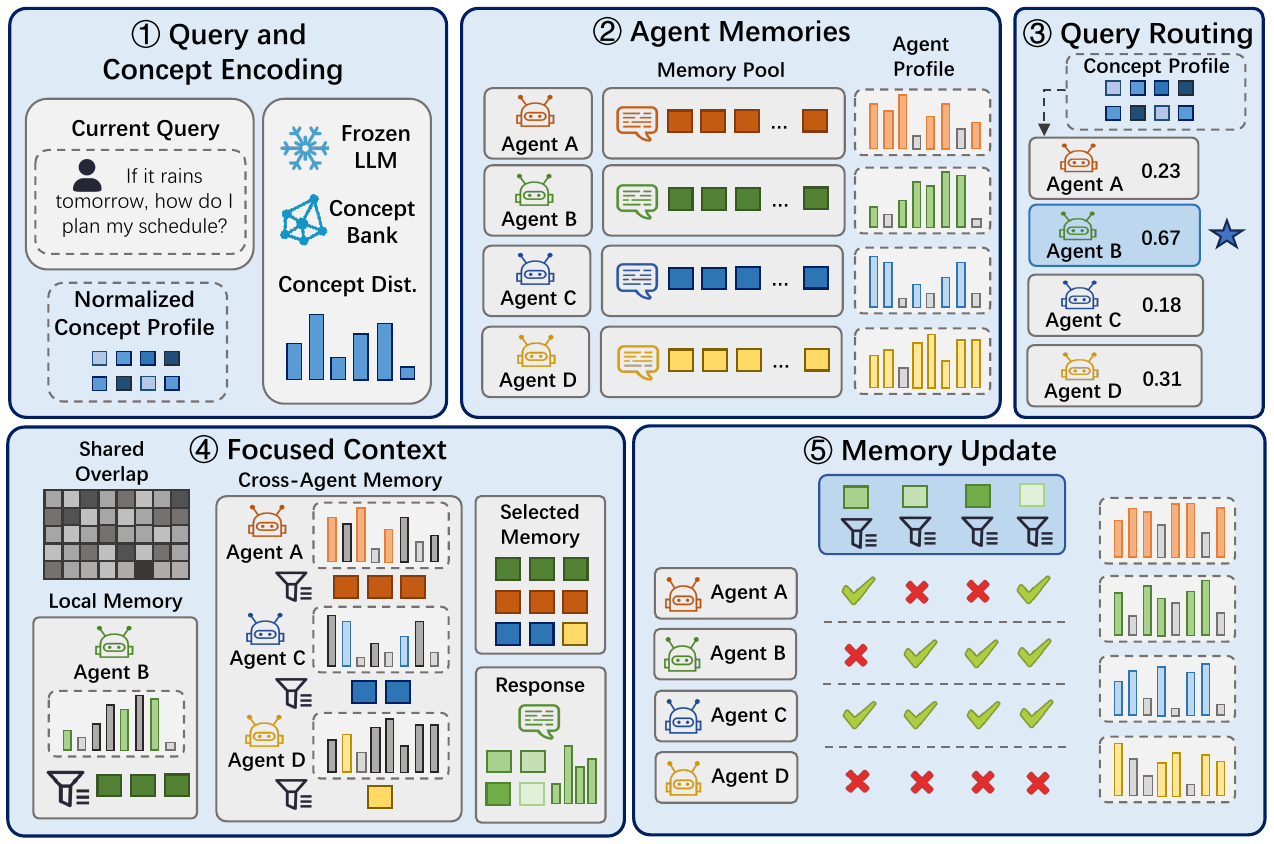
Concept-Profile Guided Cross-Agent Memory Sharing for Multi-Turn Conversation

Zijie Wang, Zhiren Gong, Zeng Zihao, Tiantong Wu, Lei Xiao, Wei Yang Bryan Lim

Coming soon
CrossAgentMem improves multi-agent reasoning quality while controlling context overhead, achieving stronger accuracy under a bounded token budget through memory-aware collaboration.
# Multi-Agent Reasoning # Context Efficiency # Memory Systems
Paper4 visual

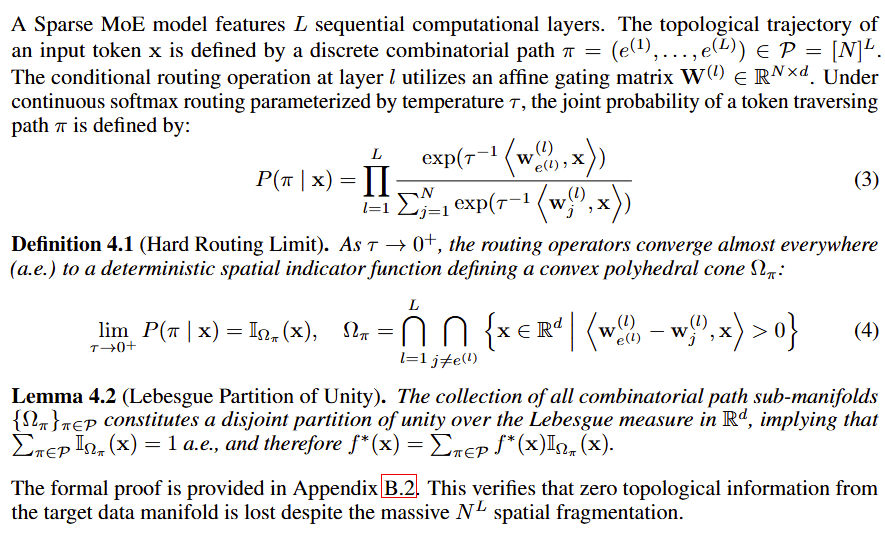
Why Mixture of Experts Needs Fewer Samples Than Dense Networks: The Information Exponent Collapse Theorem

Tiantong Wang, Zhiren Gong, Yikun Hou, Tiantong Wu, Wei Yang Bryan Lim

Coming soon
This paper provides a theory for why sparse MoE architectures can reduce sample complexity barriers compared with dense models via geometry-aware routing and exponent-collapse behavior.
# Mixture of Experts # Sample Complexity # Theory
XDomainBench project figure

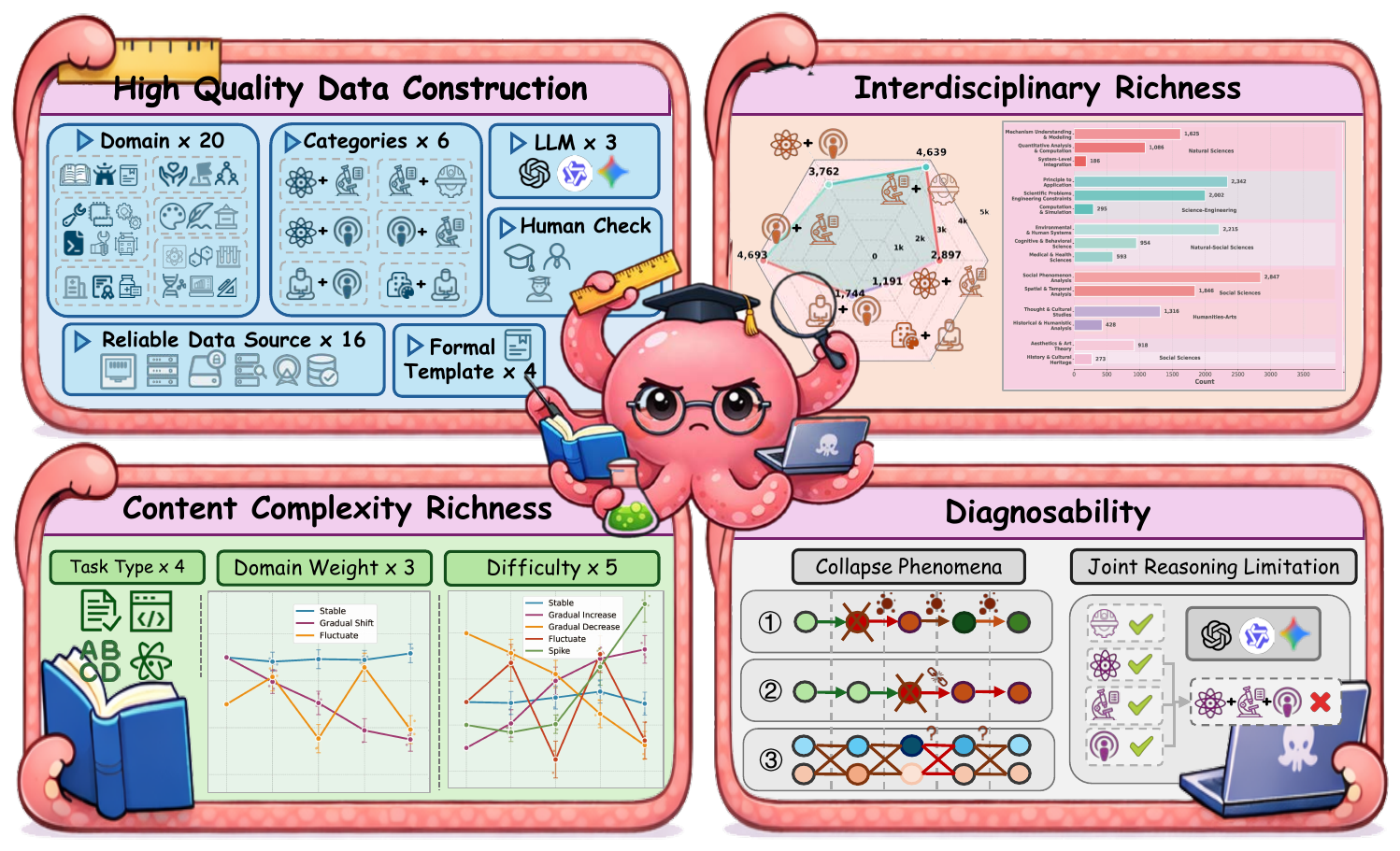
XDomainBench: Diagnosing Reasoning Collapse in High-Dimensional Scientific Knowledge Composition

Zhiren Gong, Tiantong Wu, Jiaming Zhang, Fuyao Zhang, Che Wang, Yurong Hao, Yikun Hou, Foo Ping, Yilei Zhao, Fei Huang, Chau Yuen, Wei Yang Bryan Lim

ICML 2026
XDomainBench provides a systematic benchmark for stress-testing large models under cross-domain scientific composition, revealing where and why reasoning collapses as composition complexity increases.
# Benchmark # Reliability # Scientific Reasoning
C2U in RAG visual

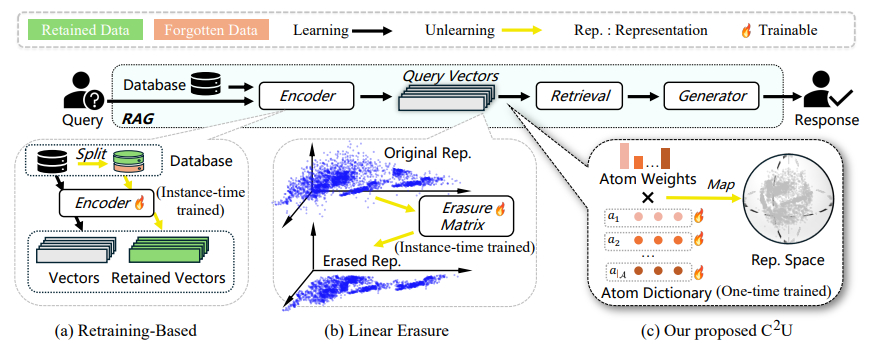
C2U in RAG: Compositional Concept Unlearning in Retrieval-Augmented Generation

Yiyang Duan, Fan Wu, Tiantong Wu, Che Wang, Zhiren Gong, Wei Guo, Yang Cao, Wei Yang Bryan Lim

Coming soon
C2U in RAG studies compositional concept unlearning in retrieval-augmented generation to selectively remove target knowledge while preserving utility on retained concepts.
# RAG # Unlearning # Compositionality
Paper1 visual

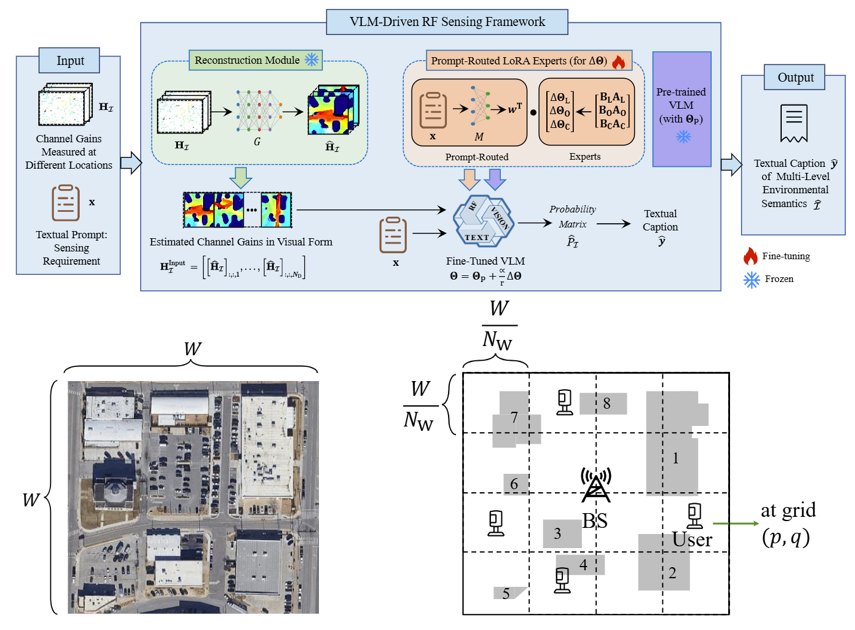
Channel Gains to Captions: Task-Unified Multi-Level RF Sensing with Vision-Language Models

Tianyu Hu, Zhiren Gong, Haowei Cui, Shuai Wang, Samson Lasaulce, Lingxiang Li, Wassim Hamidouche, Zhi Chen, Merouane Debbah

Coming soon
This work studies task-unified RF sensing with vision-language models, aiming to align channel-level signal structures with caption-level semantic outputs in a single framework.
# RF Sensing # Vision-Language Models # Multimodal Intelligence
Paper2 visual

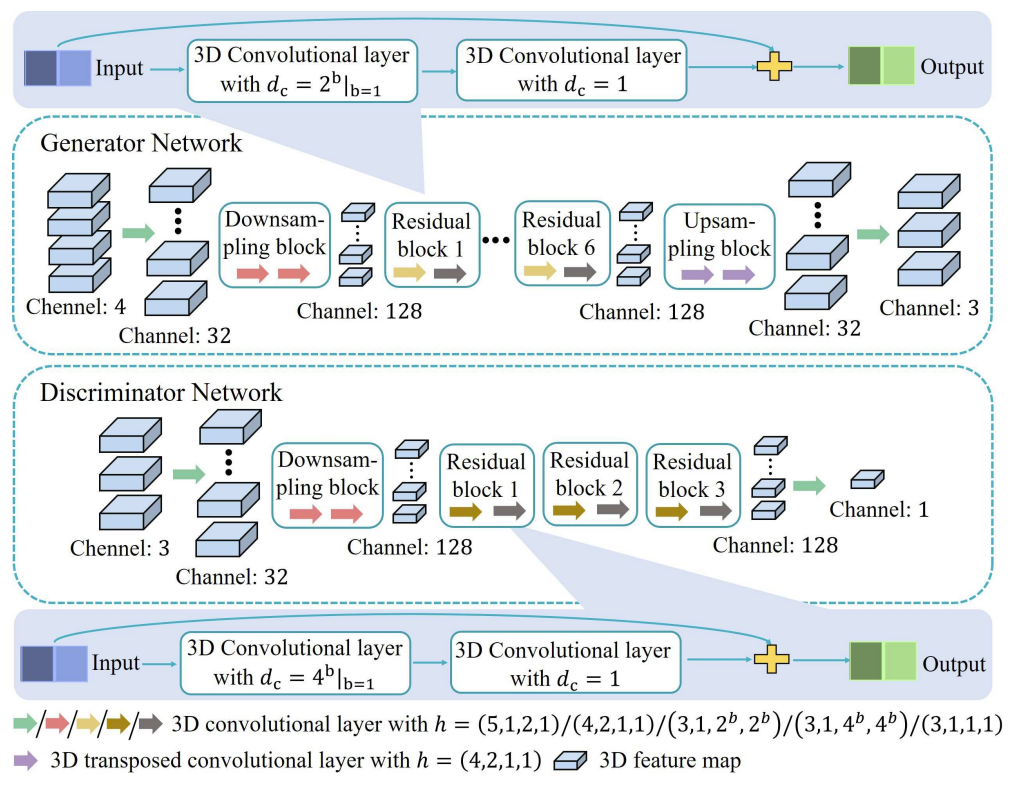
3D Radio Map Reconstruction based on Generative Adversarial Networks under Constrained Aircraft Trajectories

Tianyu Hu, Yang Huang, Junting Chen, Qihui Wu, Zhiren Gong

IEEE TVT 2023
A GAN-based method reconstructs 3D radio maps from sparse aircraft measurements under trajectory constraints, improving reconstruction quality under realistic sensing conditions.
# Wireless AI # 3D Radio Map # GAN
Paper3 visual

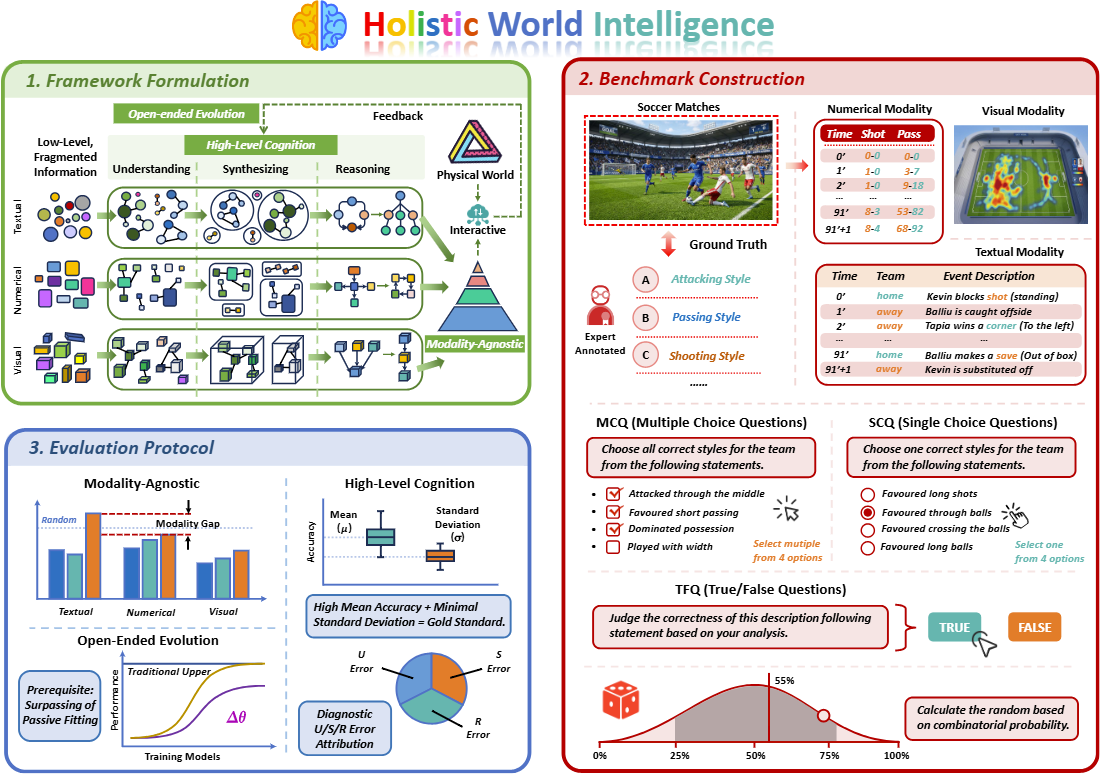
When Large Language Models Meet the Physical World: Holistic World Intelligence Collapses

Yang Liu, Zhiren Gong, Xiaoping Wang, Jianbo Zheng, Guanghui Ye, Jinhong Hu, Kai Lu, Wei Yang Bryan Lim

Coming soon
This work analyzes capability collapse when LLM-style systems face physical-world, non-semantic modalities, and studies how to build safer and more robust cognition in such settings.
# LLM + Physical World # Robustness # Reliability

Achievement iconAchievement

  • NTU Research Scholarship (RSS), PhD Program.
  • NUAA Outstanding Graduate (Top 1%) and Outstanding Thesis 2023 (Top 4%).
  • Headmaster's Special Mention (2020, 2022), highest undergraduate honor at NUAA.
  • Top 10 Outstanding Youth of NUAA (2022).
  • Aviation Industry Honors Scholarship (Top 0.01%).
  • National Scholarship of China (Top 1%).
  • First Prize Outstanding Student Scholarship (Top 5%, 2019 - 2023).
  • National Second Prize (Top 3%), China Undergraduate Mathematical Contest in Modeling (CUMCM), 2021.
  • Meritorious Winner (Top 8%), Mathematical Contest in Modeling (MCM), 2021.
  • Asia Second Prize, Asia Pacific Mathematical Contest in Modeling (APMCM), 2020 and 2021.
  • Provincial Second Prize, Jiangsu Province Engineering Ability Competition, 2021.
  • National First Prize (Top 10%), National College Students Academic Physics Competition, 2020.
  • National Second Prize, East China Mathematical Contest in Modeling, 2020.
  • National Second Prize, Huajiao Cup National College Students Mathematics Competition, 2020.
  • National Second Prize (Top 20%), National College Students Mathematics Competition, 2019.
  • Three-dimensional Spectrum Situation Completion Method and Apparatus based on Generative Adversarial Network
    PCT/CN2022/073723, WO 2022/206149 A1 (co-inventor).
  • An Unmanned Aerial Vehicle Decision Evaluation Method in a Complex Environment
    Chinese National Invention Patent CN113673149 (A).
  • Adaptive Parking Lot Intelligent Management and Control Method based on Neural Network
    Chinese National Invention Patent CN113283302 (A).
  • Intelligent Garbage Sorting Device and Method based on Deep Learning Technology
    Chinese National Invention Patent CN113562355 (A).
  • Liquid Surface Tension Meter based on Intelligent Control of an STM32 Single-chip Microcomputer, and Use Method thereof
    Chinese National Invention Patent CN113376059 (A).
  • Device and Method for Achieving Energy-saving Cooling of Automobile by Utilizing Air Outlet Frame
    Chinese National Invention Patent CN112428788 (A).

Service iconService

Reviewer: ICML 2026 (Gold Reviewer), NeurIPS 2026, ICIC 2026, ICML AdaptFM Workshop.

Teaching Assistant: Data Science Foundations (SC3021), NTU, 2026 Spring; Excellent Support (Top 10% of Lab TAs).

Academic Talk: ICML 2026 (Korea), JST-ASTAR Nexus Meeting, Japan.